




Telcos’ disconnection of customers with non-Triple Zero compliant mobiles led a 41.6 per cent surge in no-service complaints to the Telecommunications Industry Ombudsman (TIO) last quarter, with digital services complaints also spiking by 20 per cent.
The national industry arbiter received 6,391 complaints about mobile services – up 6.8 per cent – last quarter and 1,961 of these, or 31 per cent, were from people without a working mobile or internet service, according to the TIO’s latest complaints figures.
The Greater Geelong area saw a 50.7 per cent surge in complaints during the quarter, while Brisbane customers lodged the most complaints – 676, reflecting a 24 per cent increase over the previous quarter.
The TIO received more than 400 complaints relating to Triple Zero and emergency services in the aftermath of a widespread Optus outage in late September that sparked a government inquiry and led to calls for executives’ heads to roll.
Fully 432 people complained about having no mobile service – up 95.5 per cent from the previous quarter – after a crackdown on outdated mobiles that were technically unable to connect to Triple Zero services.
Some 192 customers complained about Samsung mobiles needing to be updated, replaced or disconnected due to failures that have been linked to two deaths – with telcos moving to block outdated phones from their networks as legally required.
“This is a complex ecosystem, and everyone in that ecosystem is working to try and make sure it works absolutely as well as it can,” Telstra CEO Vicki Brady said during the company’s latest half-year earnings call.
“It is a dynamic area where devices are changing, software is getting updated, networks are changing,” she added, “and it requires work right across that ecosystem to make sure Australians continue to trust our Triple Zero system to be able to get help in an emergency.”
Smaller telcos, more complaints
Despite the issues with the Triple Zero outage and phone blocking, Telstra and Optus both saw overall complaint numbers decline quarter-on-quarter by 9.6 per cent and 2.2 per cent, respectively – while Vodafone saw a 15.5 per cent surge in complaints.
Smaller and discount telcos saw much bigger surges in complaints, with Lyca Mobile chalking up a 180.6 per cent quarterly increase, Dodo Services 77.3 per cent, Aussie Broadband 49.3 per cent, and Superloop 35.9 per cent.
Internet service complaints were up by 5.5 per cent over the quarter, with the number of no-service complaints up by a third and intermittent service or dropouts up 15.7 per cent.
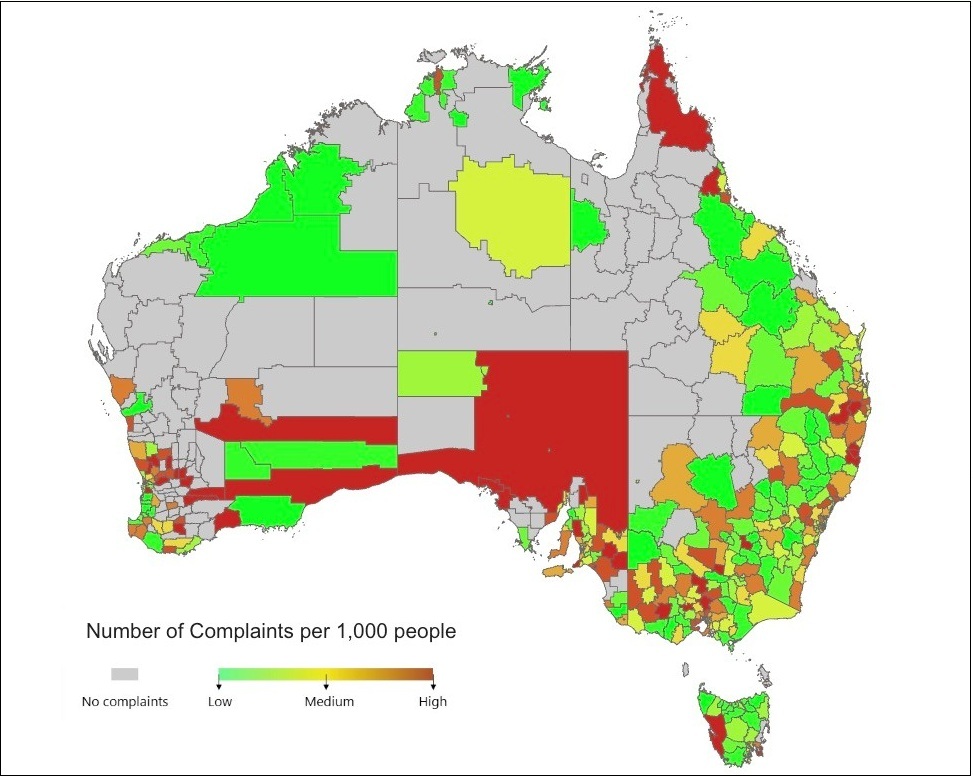
Complaints data per 1,000 people. Graphic: TIO
And while many customers had financial concerns – specifically, service and equipment fees – the most common complaint was where a service provider had taken no action, or delayed action.
The TIO has been able to intervene in situations where consumers can’t get a suitable outcome from their telco, with the agency this month welcoming ACMA action after Best Telecom ignored a binding TIO order to reimburse a customer $1,103.
Overall, however, despite the increase in concerns over service availability, financial hardship complaints – an area the TIO last year flagged as particularly problematic – dropped by 19.2 per cent quarter on quarter, with just 399 such issues reported.
That decline was an encouraging sign of “lifting standards” and a counterpoint to the overall surge in complaints, with ombudsman Cynthia Gebert, noting that “consumers don’t see phone and internet connectivity as optional anymore.”
Complaints about mobile services comprised two-thirds of all financial hardship complaints, with consumers reporting being denied payment plans or being given plans they couldn’t afford – a chronic problem in an industry all too used to pressure tactics.
“We need settings that match modern life,” Gebert said, adding that “rules need to set the standard for phone and internet reliability, balancing community expectations and what is realistic for the industry.”
Customers struggling to get through to digital services
Even more pronounced during the quarter was the surge in customers approaching the TIO for help with social media providers and other digital platforms.
Although the TIO has no powers to regulate digital platforms – a point that Gebert has previously made in arguing for the establishment of a digital platforms ombudsman – some 719 complaints were lodged about experiences with digital platforms.
That was up 20 per cent year on year, confirming that tech giants like Meta, Google, Microsoft, Apple and Hubbl – which comprise 71 per cent of all digital platform complaints – are still leaving customers frustrated when problems occur.
Account issues, hidden charges and privacy concerns were all common but issues accessing accounts, including blocks and hacking, were the most common digital complaint.
In one case, an Australian adult couldn’t get help after her social media account – which had parental controls over her child’s account – was also blocked when the government’s social media minimum age policy came into effect in early December.
“While it’s clear these billion-dollar companies have the resources to properly handle complaints,” Gebert said, “people are still facing barriers when they try to appeal automated decisions.
“Australians need an Ombudsman for digital platforms”, she added, with the TIO “ready to expand our jurisdiction to handle both telco and digital platform complaints, and to make sure consumers get the support they need when things go wrong online.”