
The billions being poured into AI data centres may not translate into many long-term jobs, with Meta testing robots that could take over routine maintenance work currently done by humans.
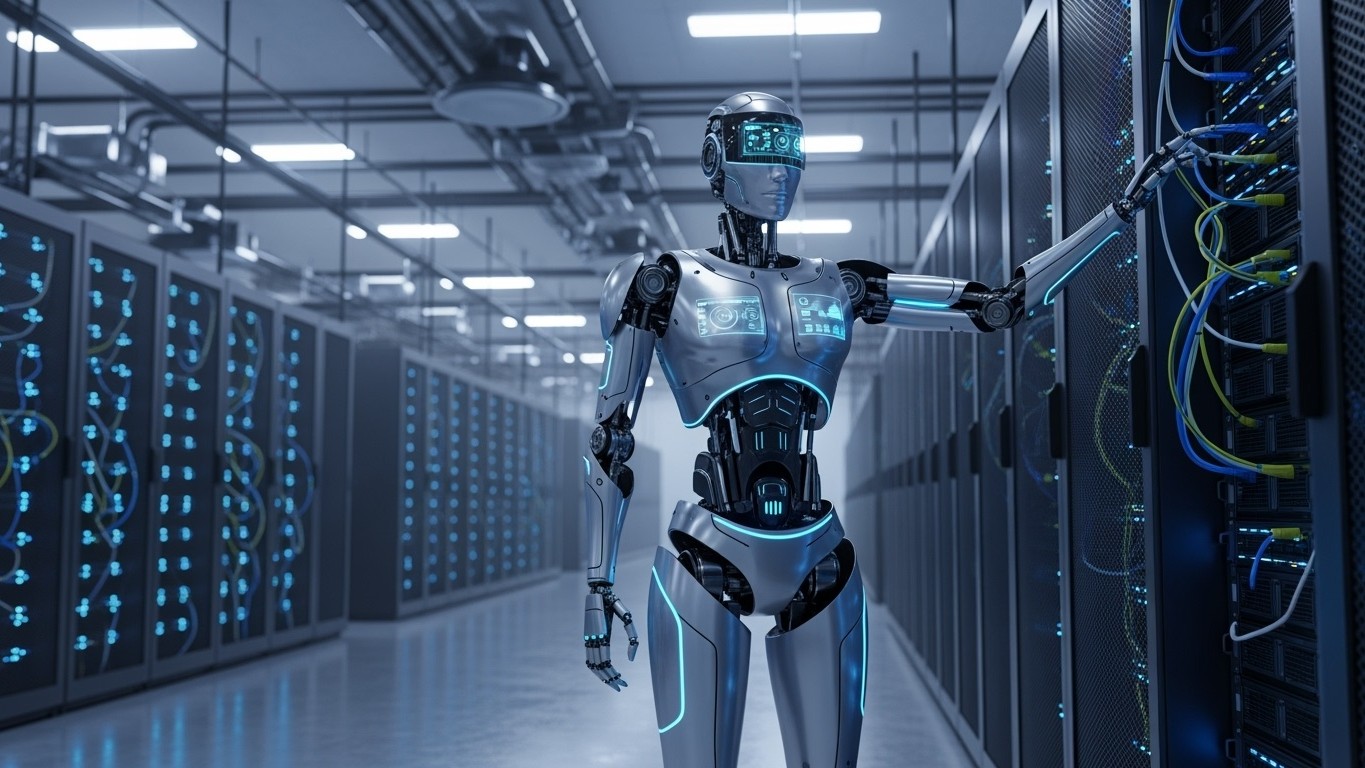
The company is experimenting with robots that can move around data centres and perform everyday tasks such as plugging in network cables and pushing power buttons on servers.
Reports suggest Meta has been testing robots from vendors including Kinova, Watney Robotics and ABB.
The technology could eventually allow data centres to operate with few or no humans onsite – a commercially appealing prospect for operators but one that raises questions about how many jobs the AI infrastructure boom will actually create.
Such tasks have long been the purview of data centre administrators who travel floors to troubleshoot and upgrade equipment – tasks that comprise 80 per cent of many workers’ days, by one count – but Meta’s robots could change all that.
Imagine self-managed data centres serviced by robots that manoeuvre through their aisles and perform manual tasks with few or no humans onsite – a commercially appealing vision for data centre operators that contradicts a recent manifesto by CEO Mark Zuckerberg.
“I do not understand why anyone who believes that AI will eliminate most jobs and most of humanity’s relevance would rush to build that future,” he wrote, adding that “invention, not automation, will be the greatest contribution of superintelligence.”
And while Zuckerberg may be focused on fears that AI will obviate the need for high-level knowledge workers, with Australia’s tech workforce shrinking and tech giants like Microsoft cutting jobs by the thousands, fears rightly persist.
“There are many important concerns we are focused on addressing,” he added, “from concerns about job displacement and ensuring local communities benefit from data centre builds…. [to] making sure humanity maintains control over superintelligence.”
“People will gain the ability to do many new things before their current jobs change.”
As data centres scale up, employment trends down
While Meta’s tests are hardly the first time robots have been used in data centres – tape autoloaders, for example, have long been used to automatically shuffle between backup tapes – the creep of human-replacing technology is likely to dovetail with other concerns.
As the world’s third largest data centre market, Australia is seeing US-styled pushback from a public that has opposed the facilities as ‘energy vampires’ – with one proposed Sydney site set to be Australia’s largest single energy user and new capacity announced regularly.
Tech giants argue that data centres create employment, but oft-cited spikes in construction demand are temporary: one recent analysis by Data Centre Geeks (DCGeeks) found that economies of scale mean AI data centres typically only employ between 15 and 300 workers – with one ongoing job created for every $46 million (US$33 million) invested in a highly efficient, large-scale AI data centre.
Meta’s Hyperion data centre in Louisiana, for example – a $70 billion (US$50 billion), 9 square kilometre behemoth nearly as large as New York City’s Manhattan island – is expected to create 7,500 jobs during construction but will offer just 1,000 permanent jobs, no doubt in part thanks to the benefits of the automation the company has been testing.
By DCGeeks’ benchmark, a newly announced $32 billion data centre at Queensland’s Western Downs Digital Park – where AI giant Anthropic will be anchor tenant in a facility that will require new generation capacity equivalent to a quarter of Queensland’s power – would only create around 700 ongoing jobs.
That site, however, will apparently lean more on human talent than mechanical automation, with its proponents reporting that it will support 1,400 direct operational roles and 2,100 indirect operational jobs in the community – cleaners, maintenance, gardeners and other staff – when running at full capacity.
Queensland Premier David Crisafulli crowed about the job prospects of the Anthropic deal when announcing it in state Parliament, calling it “a major win that will deliver more jobs and put more energy into Queensland’s grid.”
“We will take hold of the economic benefits of data centres with both hands,” he said, adding that “data centres must add value to local communities so Queenslanders benefit from the opportunity, too.”
But where is the economic value?
Given their environmental impact, power generation demand and attendant increases in energy and other costs, will lightly-staffed AI data centres be a net positive for Australia’s economy?
The “very visible and front of mind” data centre boom is driving a surge in non-mining investment equal to 13 per cent of GDP, CEDA principal economist Julie Toth told Information Age, with strong growth driving “a long period of elevated investment activity”.
The breakneck pace of data centre rollouts has increased information and telecommunications CAPEX by 91 per cent year-on-year, Toth – who recently authored an analysis comparing data centre spending to other business CAPEX – explained.
With overall business expenditure now at 12.6 per cent of GDP – the highest share of GDP since 2015, in the last years of a multi-year mining boom – Toth said “the current intensity of IT-related construction activity will be a defining story for the remainder of the decade.”
That’s great news for the specialised construction industry and largely overseas suppliers of server, networking, communications and other data centre equipment, which account for 68 per cent of new data centre spending and are 100 per cent imported.
Data centres will facilitate economic value creation through the services they enable, with property leases, permits and other regulatory overheads delivering revenues to all three levels of government.
That said, jobs don’t necessarily follow – with Toth calling data centres’ local job creation “very questionable…. the jury is still out on what AI will do to headcount employment.”
Even if robotics remove some of the drudgery of human data centre jobs, however, Toth noted that some level of human supervision will always be necessary: “there are genuine risks on site” like diesel reserves for backup generators, she said.