
Efforts to decentralise AI data centres are unlikely to soften metropolitan demand, with new modelling suggesting commercial rents in Australia – the world’s third largest data centre market – could double in two years thanks to a $155 billion pipeline with “no precedent”.
The new analysis, conducted by commercial real estate giant JLL, found that 91.3 per cent of Australia’s massive pipeline of 90 or more data centres – 16.2GW of capacity, equal to 13.5 times the 1.2GW capacity of all current data centres – will be focused in NSW and Victoria.
Competition for suitable data centre real estate will increase rent for a “standard” 20,000 square metre warehouse in outer central west Sydney warehouse by 88 per cent, JLL warned, with rents in Melbourne’s west set to increase by 132 per cent.
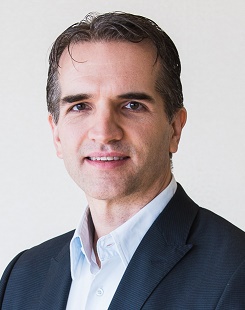
Intense competition benefits investors, JLL executive director and co-head of Australian data centres Matthew Lee said, but “the greater concern is around the time it will take projects to come to market [as] there is no precedent for the scale of the data centre pipeline.”
Entire industries are springing up to support the data centre growth, with equipment, service and logistics suppliers opening facilities near major new data centre precincts as new construction feeds what Westpac has estimated at up to 400,000 jobs.
Although surging demand is driving land costs skyward, JLL found that Asian, US and other overseas investors see Australia as politically stable, economically strong and regulatorily robust – potentially doubling Australia’s population of 162 data centres within five years.
Where industry giants like AWS, Google, and Microsoft once dominated data centre construction, Lee said the land rush is attracting interest from “a much wider range of potential end users, from top trillion-dollar companies to rapidly growing neocloud groups.”
NVIDIA, for its part, this week announced a consortium – including Australian data centre and AI stalwarts Firmus, Sharon AI, IREN, Megaport, ResetData, CDC, NEXTDC and AirTrunk – that will adopt its ‘AI factory’ platform to add 2GW of AI data centre capacity by next year.
A potential fillip for regional areas
Such growth is crystallising controversy, with residents increasingly pushing back against plans for major data centres in Melbourne, Western Australia, Western Sydney, and other sites amidst fears that the data centres are noisy, water-hoarding ‘energy vampires’.
Their concerns have collided with the unqualified support of city governments, with the City of Melbourne recently publishing a position paper outlining the opportunities promised by AI infrastructure that it calls “critical to Melbourne’s future economy”.
Even as Sydney and Melbourne fight to dominate the data centre pipeline, ongoing demand is likely to send many data centre investors looking for less costly alternatives – which could prove to be a boon for regional areas as the $200 billion energy transition continues.
Projects like Victorian firm Rural Fibre Co are betting on a regional data centre boon, investing tens of millions on high-capacity fibre backhaul that, combined with plentiful and reasonably priced land and energy, is already attracting interest from overseas investors.
“Developers and operators are reviewing” regional NSW, Victoria, Perth and Queensland, JLL head of data centres capital markets Australia Thomas Madigan said, noting that “power availability, limited competition and speed to market are major advantages.”
“The next generation of facilities will be bigger, more power-efficient, and increasingly located where the grid can support long-term growth” – such as the regional centres where growing investment in renewable energy promises to support government expectations.
A global choice for investment
Australia’s role as a global centre for development will be aided by growing antipathy to data centres in other key markets – as in the US, where 18 states have already passed moratoriums on new data centres and 24 others are discussing or pursuing them.
Many of the same challenges are being sorted out in Australia’s data centre market, with JLL noting that a 1MW data centre consuming as much electricity as 40 shopping centres, 360 warehouses or 440 office buildings – driving data centre consumption sky-high.
A recent comparison of data centre markets by commercial real estate services firm Cushman and Wakefield found Sydney has the 22nd largest operational IT load globally – and Melbourne with the eighth largest number of pre-leased sites planned and under construction – although grid stability was lagging.
Data centres consume around 3 per cent of electricity today but this will surge to 13 per cent within a decade, regulator AEMO has said – putting total data centre power consumption at levels equal to the total usage of NSW and Victorian homes today.
With billions of dollars’ investment at stake, governments and energy regulators are working to balance the resource demands of data centres with their economic potential – a fine line that Australia, as the world’s third largest data centre market, is working to walk.
Treasurer Jim Chalmers flagged data centres’ promise, calling AI “the most transformational economic development of our lifetimes” and noting that “the fact that our growth is as strong as the US and stronger than other major advanced economies is a good thing.”
Yet investors’ enthusiasm may be tested as rents continue to surge, with JLL noting economic rents are already 30 to 43 per cent above market rates in Sydney and 64 to 103 per cent above market in other areas – even without the premiums paid by data centre developers.