

“Vulnerable” users of social media and other digital platforms have no recourse when tech giants ignore their problems, the Telecommunications Industry Ombudsman (TIO) has warned, in urging the government to expand its remit to better protect consumers.
Despite having no official role relating to digital platforms, the TIO fielded 1,537 enquiries about problems with digital platforms between January 2023 and August 2025 – around 50 enquiries per month – and more complaints pour in every day.
Those complaining to the TIO “have often exhausted forums, chatbots, and email helplines,” ombudsman Cynthia Gebert said, warning of the “confusing” and “profound” effect on consumers detailed in a new report detailing the TIO’s experiences.
Media regulator ACMA has analysed the reporting of online harmful content – which is specifically regulated – but most of the complaints received by the TIO are “transactional,” Gebert said, and reflect users’ more mundane everyday issues.
Most relate to account access (36 per cent), fees and charges (34 per cent), and “faulty” products and services (25 per cent) – with 71 per cent of all complaints relating to Google, Microsoft, Apple, Hubbl, and Meta.
Many mirror the telco complaints the TIO manages on a daily basis – but tech giants’ customers are vulnerable, Gebert said, because there are no similar protections for users of digital platforms who are “struggling to resolve their issues.”
“Unable to speak to a person about their problem,” she said, “they call the TIO in the hope that we will listen and help.”
“People are struggling to solve their complaints directly, coming up against unhelpful chatbots and automated emails,” Gebert said, calling it “heartbreaking” when the TIO has to turn desperate customers away.
“These problems can happen to anyone, often without warning, but we cannot help fix their problem… because our remit does not include digital platforms.”
A testing time for Big Tech’s customers
Some 36 per cent of the complaints received by the TIO relate to account access issues like blocks and bans – presaging a likely significant spike in complaints when the introduction of this week’s social media age ban sees millions of users blocked.
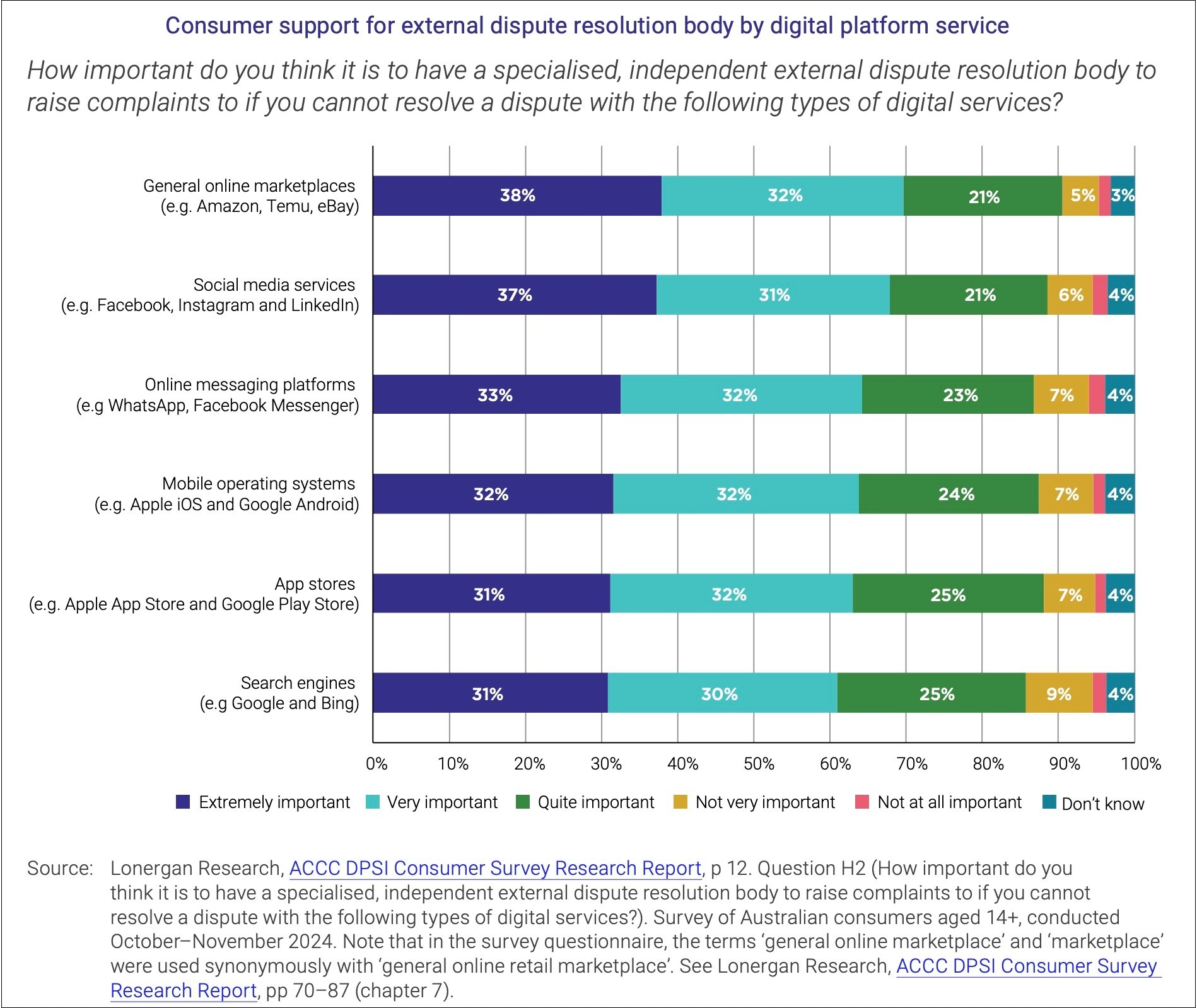
Consumers want an official way to complain about Big Tech. Source: TIO
With underage users already being blocked a week early, social media platforms face a potential tsunami of complaints – not only from people who may not be aware of the ban’s details, but from those erroneously kicked off by age verification systems.
If you or your children have been kicked off of a social media platform due to an inaccurate estimate by age verification technology, don’t contact the TIO.
Rather, each social media platform has its own methods for handling customer issues – Meta offers ID uploads, for example, while TikTok manages an appeals process and Snapchat advises that it offers “support and appeal options” in its app.
Be prepared to be fobbed off: digital platforms are also directing frustrated users to their age verification partners – with Snapchat using k-ID, Meta partnering with Yoti, and others tapping selfie and document handling services that you’ll have to navigate.
“From the beginning, we’ve acknowledged this process won’t be 100 per cent perfect,” Prime Minister Anthony Albanese recently said, “but the message this law sends will be 100 per cent clear…. Social media companies have a social responsibility.”
Explicitly protecting consumers online
Whatever each company does to meet this responsibility, the government should provide universal recourse for aggrieved consumers by expanding the TIO’s remit to make it the Communications Ombudsman, Gebert said.
Such a change, she explained, “can help close a key gap in consumer protections and restore trust in the digital economy.”
That trust is already struggling, with Meta and Facebook ranked as Australia’s third most distrusted brand – and X, the ninth most distrusted – in Roy Morgan’s latest survey of nearly 20,000 Australians.
Australia isn’t the only economy struggling to impose broader protections for consumers struggling with digital giants.
The US, for one, has considered laws introducing a new federal commission to regulate digital platforms while the UK’s Digital Regulation Cooperation Forum (DRCF) unified four separate digital-related regulators before a new law overhauled the rules last year.
Nearly 75 per cent of people believe it should be easier to complain about a digital platform, Gebert said, noting that the recent Digital Platform Services Inquiry found 82 per cent of respondents want to see an independent body created for this purpose.