


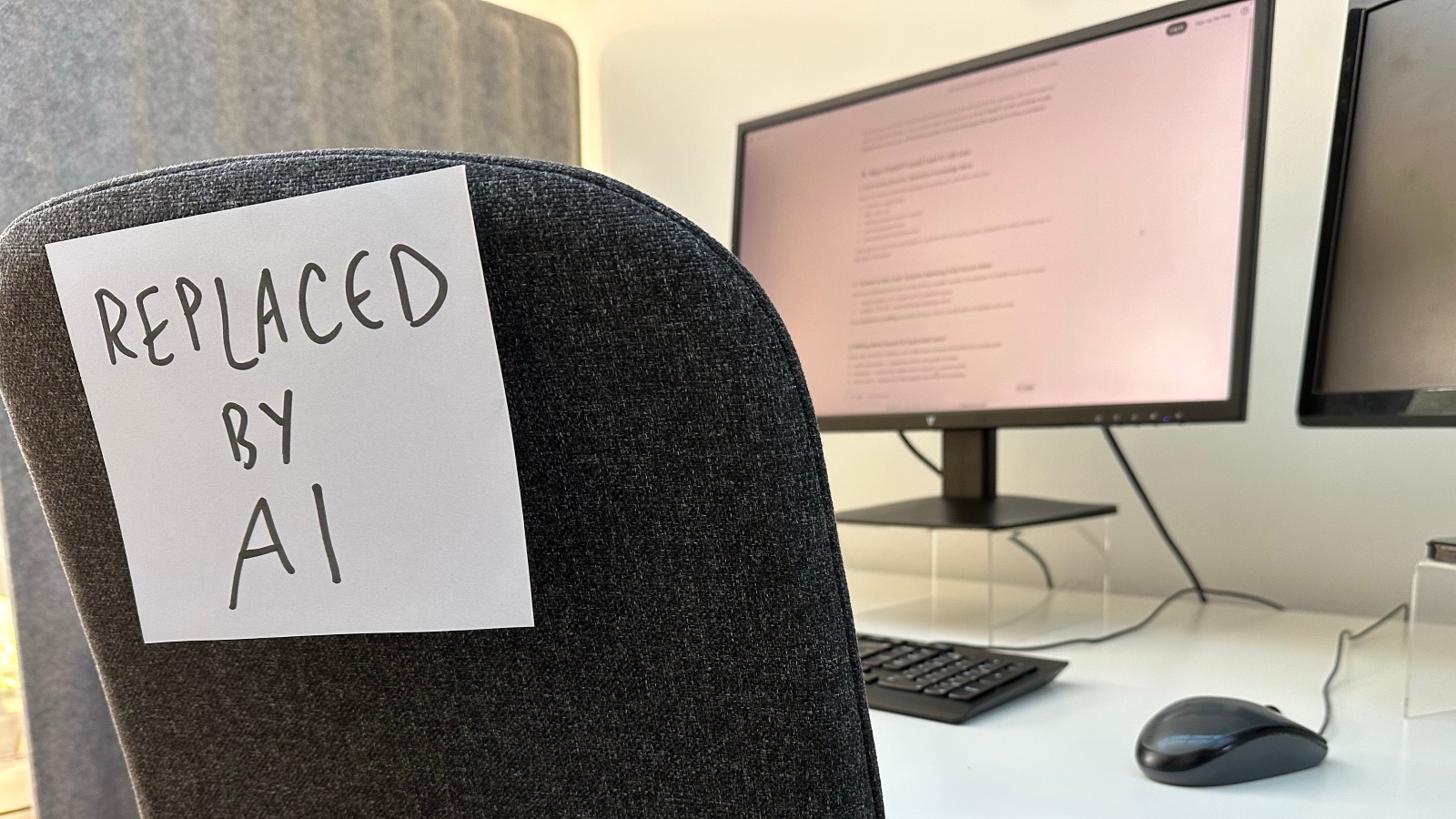

An Australian company has adopted an innovative approach to encourage its workers to embrace new technologies: if they prove their job can be completely replaced by AI, they’ll be paid two years’ worth of their salary.
Melbourne-based creative agency Kill Boring Dead recently revealed the unique offer has been made to all its team members, and has dared other Australian companies to do the same.
If any of the agency’s employees can prove that their role can be automated and replaced by AI, they’ll receive the next two years of their salary without having to do any work, and will be encouraged to go to the beach instead.
Removing the AI roadblock
Kill Boring Dead CEO and co-founder Marcus Willis said the aim was to remove the main barrier stopping workers from fully embracing AI – the fact that this may make their job obsolete.
“Nobody walks into their boss’s office and says, ‘Good news, I’ve found a way for you to get rid of me,’” Willis told Information Age.
“They keep doing it the slow way and quietly hope nobody notices.
“Multiply that by every person in every business in Australia, and that’s how many good ideas are sitting in drawers right now, held hostage by one perfectly rational fear.
“You can’t mandate those ideas out of people.
“You can only make it safe to say them out loud – so I removed the fear.”
Willis said the concept is not about replacing workers with AI or making any employees redundant.
“The thing people miss is that this isn’t about replacing anyone,” he said.
“I don’t want to lose a single person.
“I want to collect the ideas that would replace someone, and those are two very different things.
“If someone works out how to automate half their role, I don’t want them gone.
“I want them freed up for the bigger, weirder, more valuable work they’ve always been too busy to get to.
“The person who found the shortcut is exactly the person I want thinking about what comes next.”

Kill Boring Dead CEO and co-founder Marcus Willis. Image: Supplied
An influx of ideas, and controversy
Willis said the idea has been met positively by his staff, and that nobody has quit since it was unveiled.
“The team knows our entire industry is about to be reinvented, so they’re all in,” Willis said.
He said he has already received ideas from all corners of the business, including creative, administration, logistics, and studio, with some already capable of replacing more than half of someone’s role.
“Nobody has quite cracked the full two years’ salary yet, but a few people are getting very close,” Willis said.
The company’s different tactic has sparked some controversy, with Willis saying that some have assumed that it is a “redundancy scheme with a bow on top”.
“That just says everything about how most businesses are thinking about AI right now,” he said.
“We’ve just been handed the most powerful tool any of us will touch in our careers, and the first instinct for a lot of business owners is to use it to make the spreadsheet look thinner.
“That’s not how we think, and I’d argue it’s not a strategy at all – it’s a failure of imagination.
“If your first move with AI is cutting heads, you’re a loser, and you’ll get outrun by the businesses using it to do things nobody has done before.”
The best move is actually to retain all your staff, Willis suggested.
“Keep your people – give them the best tools in the world,” he said.
“Point them at bigger problems – that’s how you end up at the front of your industry instead of quietly trimming your way to the back of it.”
There have been numerous layoffs across the tech sector and wider economy that have been blamed on the increasing adoption of AI.
But a recent report found many companies have since started rehiring workers they previously sacked because of AI adoption, as part of a “recruitment correction”.
A first-of-its-kind Australian government report earlier this year found that there is “no evidence to date of broad labour market upheaval” due to AI.
Separate research has found that hiring has slowed in several tech roles that are most impacted by AI, but that the technology may ultimately reshape these roles rather than completely eliminate them.
The study found the tech roles most vulnerable to AI-based disruption are ICT trainers, software programmers, database administrators, test engineers, and ICT sales professionals.