


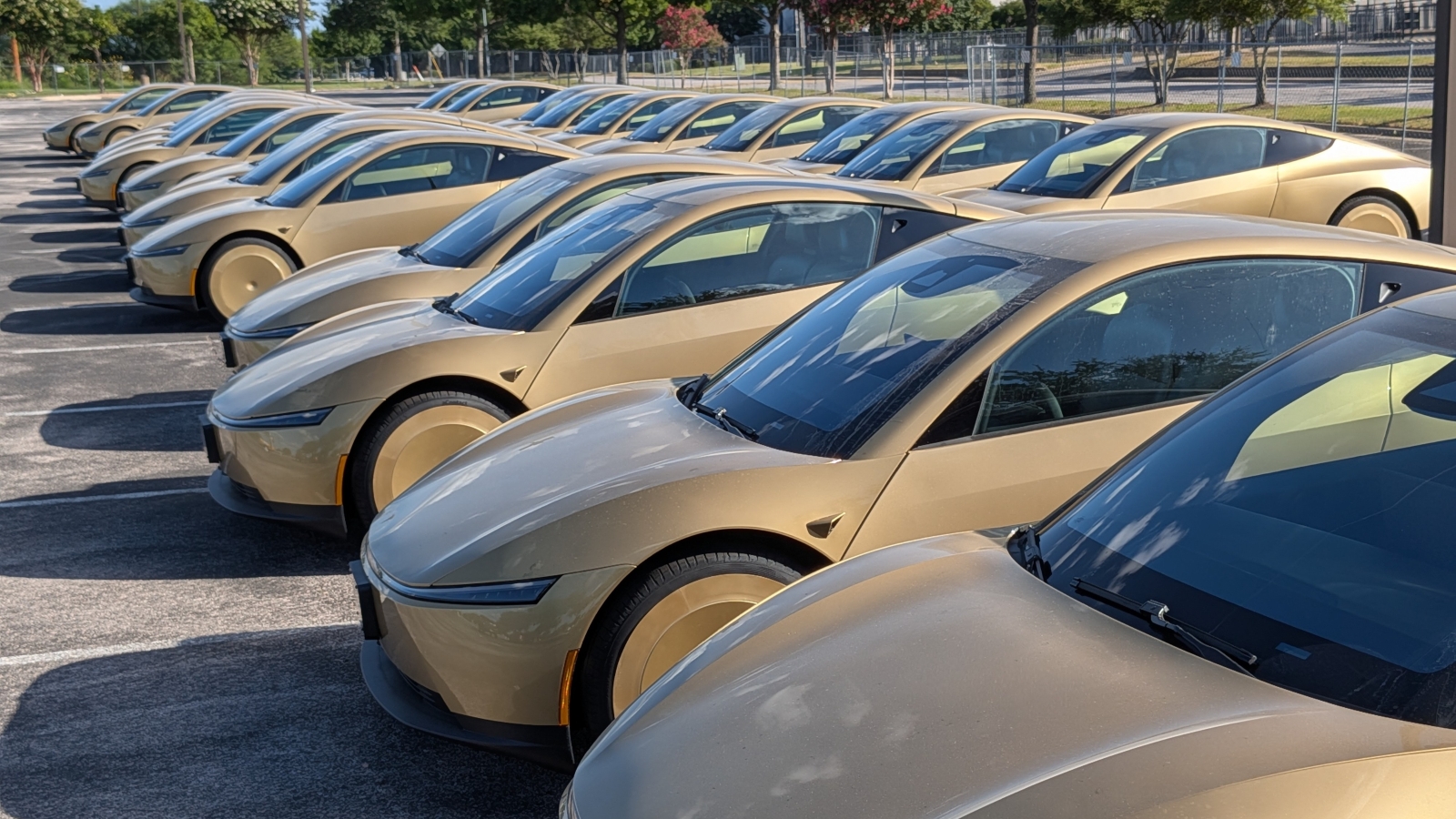

Tesla has urged the Australian government to support a trial of autonomous vehicles (AVs) in 2027, after the American technology giant began rolling out Cybercab robotaxis in the United States earlier this year.
Tesla recommended Australia "support an autonomous vehicle trial in 2027" by granting permits for testing on public roads, in a 16 October submission to a parliamentary inquiry on productivity, published on Wednesday.
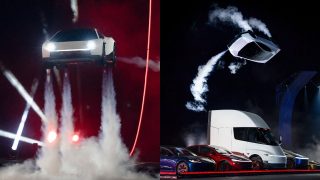
The company is currently touring its autonomous Cybercab – which does not have pedals or a steering wheel – around its Australian showrooms, but is unable to test it on local roads.
While the federal government is developing a new Automated Vehicle Safety Law (AVSL) to enable AVs on public roads, Tesla recommended that Canberra work with industry to approve local AV trials "until such time that the national regulatory framework for AVs is in place".
The company, which is led by CEO Elon Musk, also recommended the federal government work with states and territories to "accelerate the proposed AVSL, including via streamlined federal-state/territory coordination mechanisms and technical standards development".
"Australia’s AV regulatory framework was first proposed by the National Transport Commission back in 2016," Tesla wrote.
"Today, progress on a national AV framework remains fragmented and continues to face uncertain timelines."
Union fears job losses, as Tesla pushes safety message
The arrival of AVs in Australia, which Tesla described as "inevitable", could pose a threat to many transport workers – including those whose industries have already been disrupted by the likes of rideshare services such as Uber and Didi.
The Transport Workers Union (TWU) has asked the government to make sure human drivers are assigned 95 per cent of transport jobs in the early rollout of AVs, before dropping to a minimum of 85 per cent over time, as workers face "the urgent threat posed by robotaxis".
The union argued "governments must establish a human-focused deployment model before automated vehicles are introduced", in a recent submission to a separate parliamentary inquiry on artificial intelligence.
"That model must protect secure transport work, ensure productivity gains are reinvested into redeployment opportunities, wages and conditions, preserve human control and accountability, require consultation with affected workers and unions, and ensure any deployment delivers verified social and economic benefit," the TWU wrote.
Tesla argued in its submission to the productivity inquiry that enabling autonomous vehicles on Australian roads would save lives and result in fewer traffic accidents.
"Accelerating implementation of the AVSL by just two years (ie. bringing forward current expected implementation of 2029 to 2027) would not just save hundreds of lives and prevent thousands of injuries, but also unlock more than $10 billion in safety, productivity, environmental, and economic benefits as independently modelled by the Autonomous Vehicle Association of Australia and previously shared with the government," the company said.
Tesla enabled full self-driving (FSD) features for its Australian vehicles last year, but users are still required to actively supervise their cars while on the road.
"Since launching in September 2025, Tesla vehicles have completed over 160 million kilometres on Australian and New Zealand roads with FSD (Supervised) activated," the company wrote in its submission.
It argued the technology "has helped to significantly reduce the risk of tired, speeding, or distracted drivers leading to accidents".
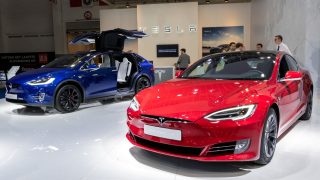
Aside from its autonomous Cybercab, Tesla also has robotaxi versions of its Model Y midsize SUV, and is developing a so-called Robovan for larger groups.
The company announced earlier this month that it has cancelled plans to sell its polarising Cybertruck in Australia and New Zealand, while its redesigned second-generation Roadster is also unlikely to be made available Down Under.
Waymo eyeing off Australia, too
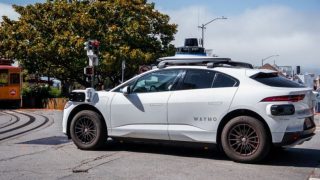
Google's parent company Alphabet is also pushing for Australian trials of its robotaxi service Waymo, which is already available in London, Tokyo, and numerous American cities.
Waymo hoped to test its AVs in Australia as early as 2026, according to documents released through Freedom of Information laws earlier this year.
While local trials are yet to occur, Waymo has reportedly held discussions with state governments about the potential of local testing.
Transport ministers from around Australia agreed in November 2025 to allow "the conditional deployment of automated vehicles from 2027 in selected locations, with full national readiness to follow", according to the government's National Transport Commission.
"This timeline will depend on each state and territory updating its legislation and building the necessary capabilities to support safe and lawful operation."