
Update 12/10/26: Acer has since announced it actually will sell the Acer Googlebook 14 in Australia from November, at $2,599 – just over double the converted US price.
Original story: Google detailed its first Googlebook laptops on Tuesday, confirming the cheapest of the five models being manufactured by prominent computer brands will not be available in Australia.
While the Googlebook lineup will start from $US899 (around $1,250) in the United States, the cheapest models available in Australia will cost significantly more.
That's because the Acer Googlebook 14 – the cheapest model in the US, and the only device in the lineup which can convert into a tablet – will not be available in Australia, a Google spokesperson confirmed to Information Age.
The lowest-cost Googlebooks in Australia – the HP Googlebook 14 and Lenovo Googlebook 15 – will both retail from $2,299 locally.
The more expensive Dell XPS Googlebook will start from $2,399, while the ASUS Googlebook 14 will start from $2,799.
Expect to pay more for extra memory
The first Googlebook devices come with at least 16GB of RAM and feature either an Intel Core Ultra or Snapdragon X Elite processor and at least 13 hours of battery life, Google said.
Australian buyers can expect to pay $300 more for 32GB of RAM on the Dell XPS Googlebook, and $700 extra for 32GB of RAM on the HP Googlebook, as memory prices continue to rise.
Each Googlebook model has a touchscreen and runs a version of Google's previously mobile-focused Android operating system.
The four models available in Australia will launch on 5 October, Google said, with all but the Lenovo Googlebook 15 featuring 512GB of storage as standard.
While more Googlebook models are expected in future, Google is yet to announce a Google-made laptop in the lineup, despite manufacturing its own Pixel smartphones and some laptops in the past.
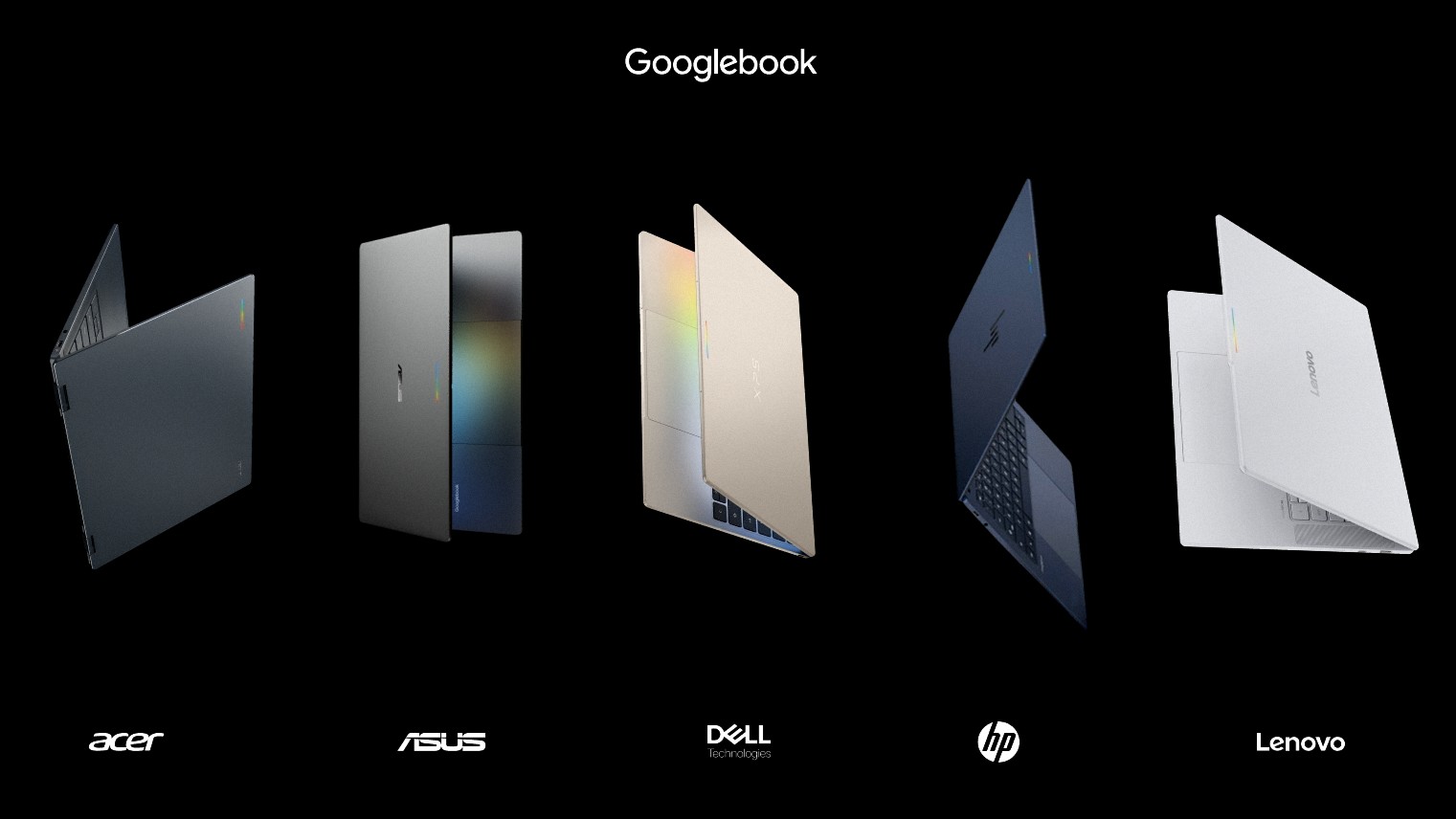
The Acer Googlebook 14 (pictured far left) will not be available in Australia, Google says. Image: Supplied
Googlebooks aimed at Android and Gemini users
Google has positioned its Googlebook laptops as premium devices aimed at Android smartphone users, and has marketed them as "the laptop your Android phone has been waiting for".
"You get the desktop-class Chrome browser with extensions alongside millions of Android apps, many of them optimised for large screens, mouse and keyboard input," the company said.
Googlebook laptops will include new features called Continue On and Cast My App, which allow users to use Android apps from their smartphone on their Googlebook screen – in a similar way to the Continuity and iPhone Mirroring features seen in Apple's operating systems.
Google's Gemini artificial intelligence models are also deeply integrated into its Googlebook software, which is "built on the Android technology stack and paired with desktop foundations from ChromeOS", the company said.
Google teased its Googlebook plans in May, when it again signalled it would move away from the ChromeOS platform its earlier Chromebook laptops had run on.
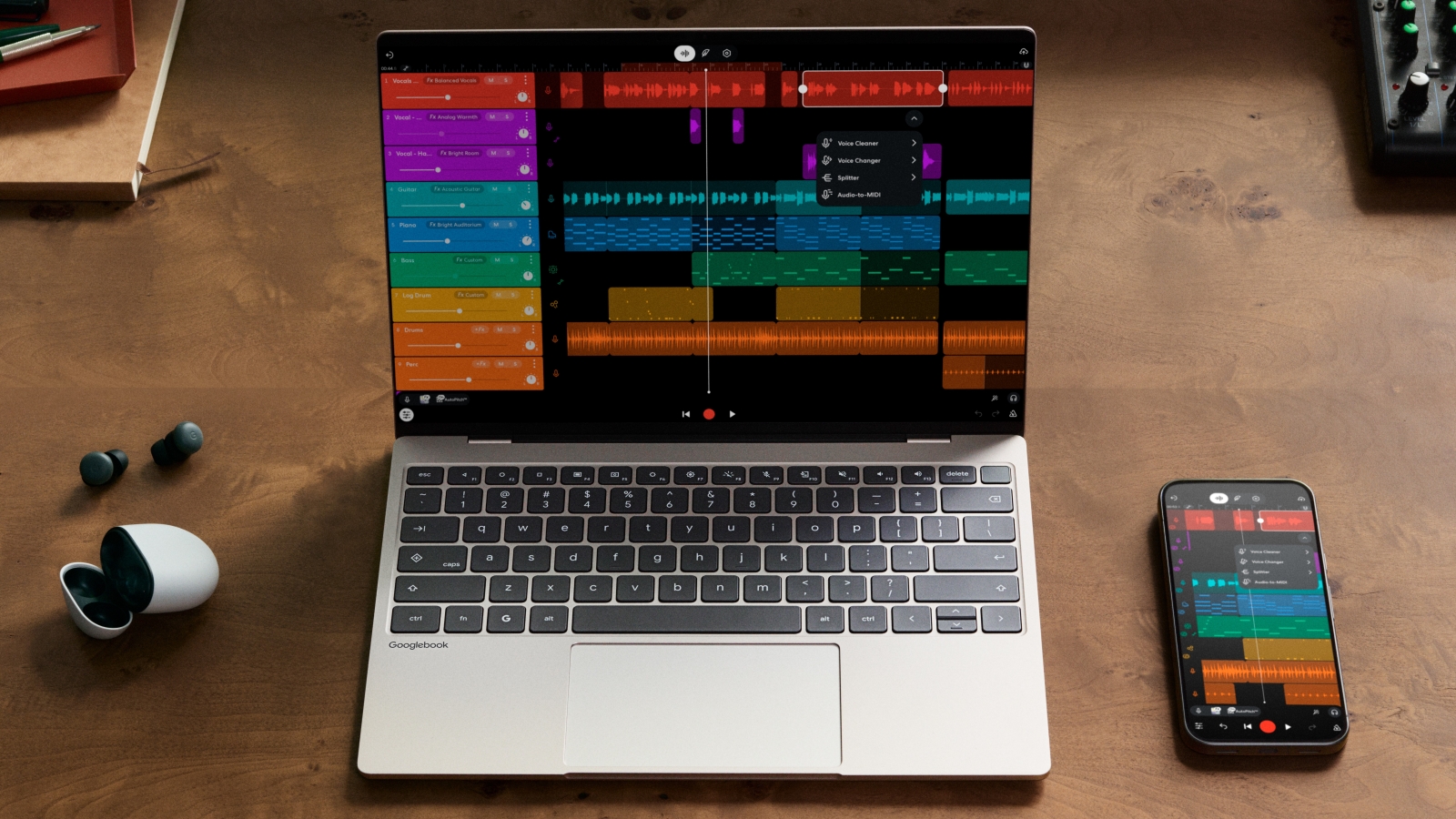
Google says its Googlebook devices allow tight integration with Android smartphones. Image: Supplied
Googlebooks will have dedicated Neural Processing Units (NPUs) to handle generative AI and machine learning tasks, Google said – including to transcribe speech and to enable plain language requests for the creation of custom widgets with Gemini.
A feature called Magic Point will also let users summon Gemini by wiggling their cursor near an item on their screen which they want help with, Google said.
Users and developers can use Google's AI agent development platform Antigravity on Googlebooks, including "a full terminal environment to run tools like Claude Code or Antigravity CLI and perform serious agentic coding", the company said.
Linux-based agents and developer tools can also be run in a Googlebook's isolated Linux environment, known as the pKVM (protected Kernel-based Virtual Machine) hypervisor, Google added.