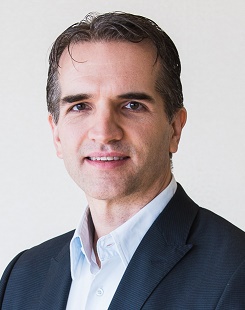
![Diraq CEO and founder Andrew Dzurak [L] with Jarrod Nink, Equinix managing director, Australia at the Equinix Sydney facility where the quantum computer would be installed.](/content/dam/ia/article/images/2026/diraq%20equinix.jpg)

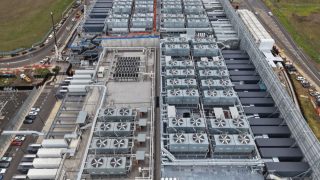
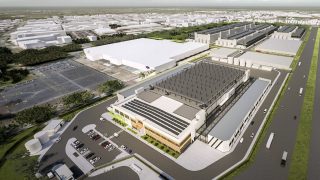
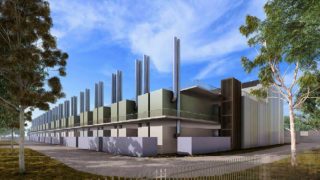
Data centre giant Equinix will soon install a modular Diraq quantum computer inside a Sydney data centre, running the cutting-edge, Australian-developed technology alongside conventional systems in a world-first deployment that will pave the way for broader quantum adoption.
The silicon spin quantum computer, which stores information based on the rotation of individual electrons, has been developed by quantum computing pioneer Diraq and will initially provide eight qubits, the quantum computing world’s basic unit of computational power.
Quantum computers work by manipulating individual electrons, typically operating at near absolute zero (-273oC) to minimise interference from heat energy – but where cryogenic equipment has typically required bulky lab setups, Diraq has bundled cooling with its server.
Its modular quantum computer, which incorporates cryogenic cooling and control electronics, can be plugged into a data centre and uses under 20kW of power, slightly more than the 5kW to 15kW used by a standard server rack, and less than half the power draw of dense AI server racks.
After its October go-live, the system – which Diraq says will be Australia’s first quantum computer inside a commercial data centre, and the world’s first silicon spin quantum computer to run in a shared commercial facility – will test interactions between conventional and quantum computers.
The companies will test how the quantum computer interacts with the surrounding conventional systems, how they change network traffic and how smoothly they work in concert to supplement the data centre’s existing compute capabilities.
The quantum processor it is based on – the result of over a decade of research by Diraq and Emergence Quantum – will initially provide just eight qubits but newer designs can be swapped in to increase the system’s computing power as quantum technology progresses.
“The data centre is where quantum computing goes mainstream, and that shift starts now,” Diraq founder and CEO Andrew Dzurak said, adding that “quantum computers are about to become as essential to data centres and computing infrastructure as data servers, CPUs and GPUs.”
“The milestone is in the simplicity itself, with Diraq’s quantum computers integrat[ing] into operational data centres like any other rack,” he said.
“As we scale to millions of qubits, our system is deployable anywhere in the world, right next to the AI systems reshaping the global economy.”
Sprinting on the long road to quantum
After decades of talking about quantum computers – which turn quantum mechanics’ idiosyncrasies into a new computing architecture capable of running certain processes billions of times faster than is possible with conventional systems – they are finally becoming real.
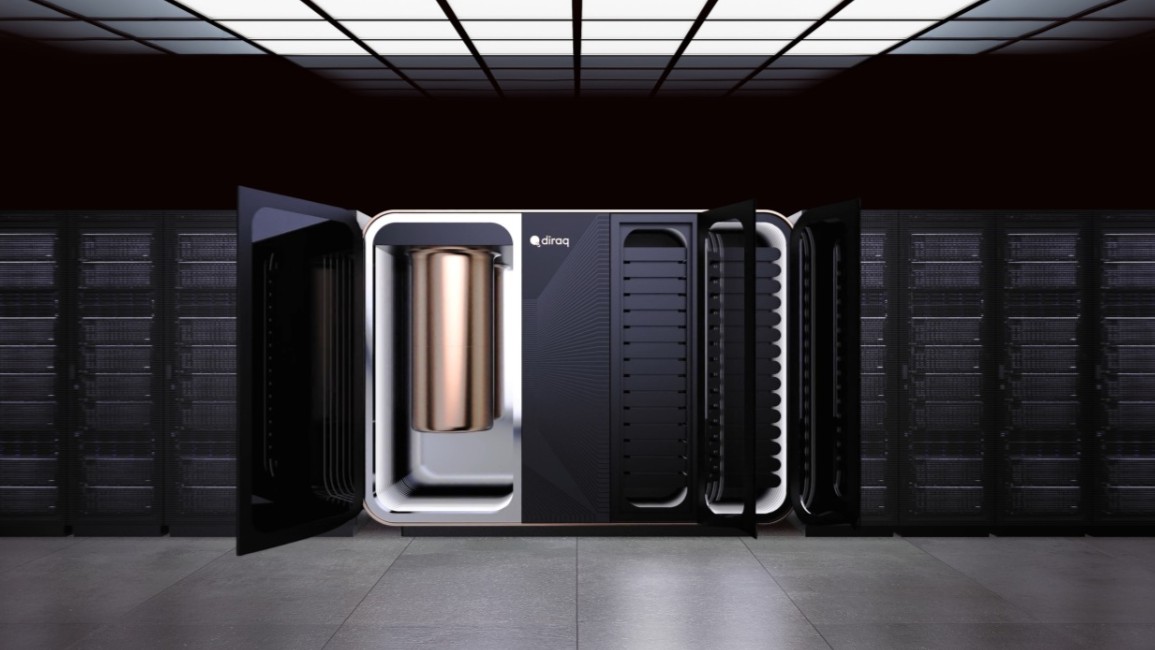
Diraq's quantum computer. Photo: Diraq
Experts once believed it would be 2040 or later before workable quantum computers would be available, but a full-court press by global governments and corporate R&D units has poured tens of billions of dollars into an industry that has brought that timeline forward to 2030 or earlier.
Researchers at Microsoft, Google, IBM, WA’s Pawsey Supercomputing Research Centre and other tech giants and startups are testing and refining quantum systems or components, with the US government recently investing $53 million (US$38 million) in Diraq and eight other quantum firms.
PsiQuantum is currently aiming to build a $1 billion quantum computer at a site on Queensland’s Sunshine Coast, but by having its system piggyback on Equinix’s existing data centre, Diraq has sidestepped the planning, construction and other complexities involved in such major efforts.
“Rather than replacing today’s systems, quantum computers will work alongside AI and classical infrastructure to solve problems that are currently out of reach,” Dzurak said, and “by bringing quantum into a commercial data centre, we’re helping pave the way for that future.”
Facing the bad that comes with the good
Mainstreaming of quantum computing will transform an industry that promises to dramatically accelerate research and modelling in fields such as biotechnology, engineering, financial services, and other areas.
Recent Quantum Australia modelling found that investments in 15 new quantum companies delivered $97.2 million in net present value over five years, as well as driving 110 industry-research partnerships and facilitating over $50 million in grant funding for quantum use cases.
Real-world use cases for the technology in areas such as quantum simulation, optimisation, machine learning and cryptography are already being explored and new applications are emerging every day – although the last of these promises the most disruption in the short term.
As quantum computers reach the scale where they can run applications better than large-scale conventional systems – a milestone called ‘quantum supremacy’ that was controversially claimed by Google in 2019 – cryptanalytically relevant quantum computers (CRQCs) will pose a new threat.
That point – known colloquially as Q-Day or Y2Q – is now expected to arrive as early as 2029, when the massive parallel computing power of CRQCs will let them break, in minutes or hours, encryption algorithms that are today considered unbreakable by conventional computers.
The Australian Cyber Security Centre (ACSC) has urged companies to inventory, update and test any system using existing encryption which protects web browsing, financial transactions, private personal data, corporate intellectual property and more, by 2030.
Instead, the ACSC has advised in a warning echoed by governments around the world, including a June US White House order, that existing encryption must be replaced with new post quantum cryptography (PQC) algorithms that can withstand the attacks of CRQCs.